The Best Environment for Growth in Basketball Club Teams San Diego
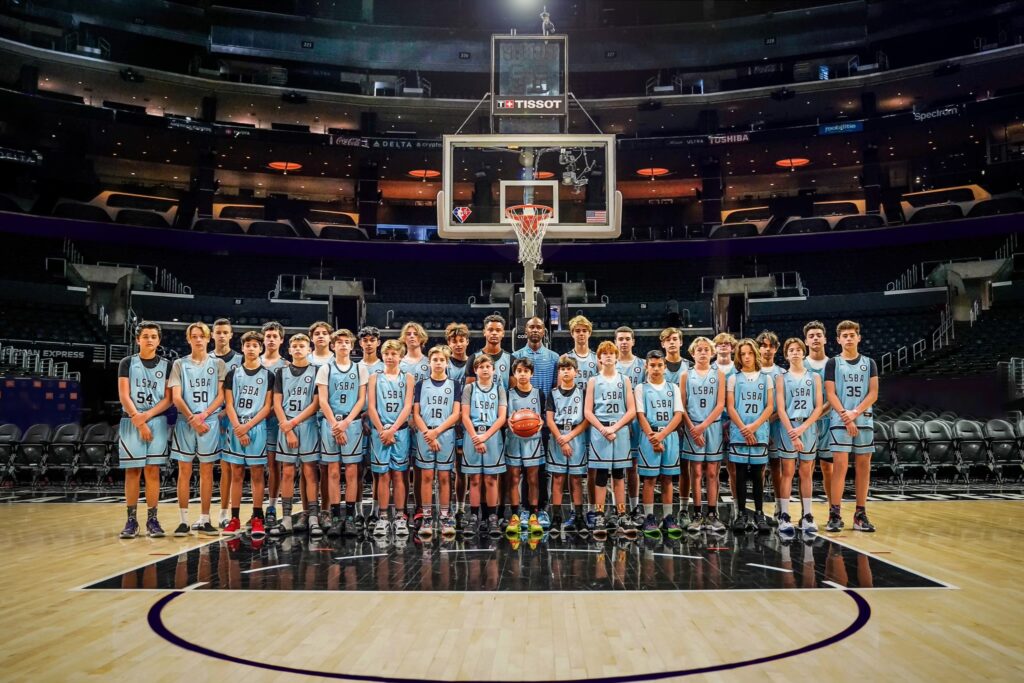
Parents and players often start with the same question: which program wins the most? It sounds reasonable. Banners matter, strong records matter, and competitive teams usually reflect good coaching. But after enough time around youth basketball, you learn that wins can hide as much as they reveal. The best environment for growth is not always the loudest gym, the most decorated social media page, or the team with the earliest promises about exposure. It is the place where players improve steadily, compete honestly, stay engaged, and build habits that hold up when the game gets hard.
That distinction matters a great deal when evaluating Basketball Club Teams San Diego. The area offers a wide range of opportunities, from neighborhood-based programs to travel teams with regional schedules and serious ambitions. For families, that variety is both a strength and a challenge. There are strong coaches, dedicated administrators, and talented players throughout the county. There are also meaningful differences in philosophy, development pace, and expectations. The right environment for one athlete can be the wrong fit for another, even if both players are the same age and skill level.
Growth in basketball is not a mystery. It usually comes from a combination of sound coaching, consistent https://beaucfuw764.lowescouponn.com/how-san-diego-basketball-club-teams-help-athletes-reach-their-goals reps, good competition, accountability, and emotional stability. Put those elements in the wrong order, though, and progress stalls. A player can be pushed too fast, buried on a roster that is too deep, or praised so casually that weaknesses never get addressed. I have seen capable young guards lose confidence because every mistake earned a quick substitution, and I have seen late bloomers become excellent players because one coach gave them six patient months of real developmental work.
The best club team environment is rarely built on hype. It is built on daily standards.
What growth really looks like in a club setting
When people say a player is growing, they often mean one of two things. Either the player is scoring more, or the player made a more prestigious team. Neither measure is useless, but both can be misleading. Real growth in club basketball is usually visible in smaller, more reliable ways. A player starts reading help defense one beat earlier. Footwork gets tighter on closeouts. Turnovers drop because the athlete no longer dribbles into crowds. Conditioning improves enough that effort stays consistent into the fourth quarter. Confidence stops depending on whether the first shot goes in.
Those gains are not always dramatic from week to week. In fact, strong development often looks almost boring in the short term. The athlete is learning to screen properly, to sprint back every possession, to communicate on switches, to pivot under pressure, and to handle frustration without shutting down. These are not flashy improvements, but they are exactly what separate players who peak early from players who keep climbing.
That is why the best Basketball Club Teams San Diego should be judged by more than tournament results. Ask whether players are more skilled in February than they were in September. Ask whether role players understand their jobs better after a season. Ask whether practices are teaching game habits or just running players through drills that look organized but change very little. A team can go 3 and 1 over a weekend and still fail its athletes if nobody is truly developing.
Why San Diego can be a strong place for player development
San Diego has several natural advantages for club basketball. The climate supports year-round training. Families can choose from programs spread across a large county, which creates options in both competition level and training style. There is also a healthy mix of school basketball, private training, and club play, so athletes are not limited to a single pathway.
That said, choice can create confusion. In a market with many teams, some programs define themselves by travel schedules, branded gear, or selective tryouts. Those things can have a place. Serious teams need organization, and ambitious players need challenge. But in practical terms, the strongest developmental environments usually stand out in quieter ways. Their practices start on time. Coaches teach details. Feedback is direct, not theatrical. Players know what is expected. Parents are informed without being invited to run the team from the sideline.
San Diego also has a broad player pool, which creates an important dynamic. Strong athletes can find themselves either appropriately challenged or badly misplaced. If a player dominates weaker competition every weekend, development slows. If that same player jumps too soon into a roster where touches disappear and confidence erodes, development can also slow. The sweet spot is not always easy to find. It takes honest evaluation from coaches and restraint from families.
Coaching is the center of the environment
Facilities matter. Schedule matters. Teammates matter. But coaching drives almost everything. Not just the knowledge of the game, but the ability to teach it in a way young athletes can absorb.
A growth-oriented coach does a few things well. First, the coach teaches specific skills in game context. It is one thing to run ball-handling drills. It is another to teach when to reject a screen, how to attack a high foot, or why a simple jump stop saves possessions. Young players improve fastest when instruction connects directly to live situations. The lesson has to travel from drill to scrimmage to tournament floor.
Second, a strong coach communicates role clarity. This is one of the most overlooked parts of healthy club basketball. Players do not need false promises, but they do need truth. A developing wing can accept being a defender and rebounder if the role is explained and valued. What creates resentment is vagueness. If a player never knows why minutes rise or fall, frustration builds quickly. In the better programs, expectations are made clear early and revisited often.
Third, great coaches know when to press and when to protect. Young athletes are not machines. Some respond to challenge in public, some shut down. Some can handle a demanding correction after a turnover, some need a calmer moment on the bench. The best coaches are tough without being careless. They understand that confidence is not the same as comfort. Players need stress to grow, but they also need to trust that mistakes are part of the process, not evidence that they do not belong.
I have seen this difference play out with middle school players many times. In one gym, a coach barked at every missed rotation and every rushed shot. The team played tense, afraid to make the next mistake. In another gym, the coach stopped play, repositioned the players, explained the action, then demanded they run it again at full speed. Same correction, very different effect. One environment produced caution. The other produced learning.
Practice quality matters more than the tournament calendar
Families often pay close attention to how many tournaments a team enters. That is understandable. Tournament weekends are visible, exciting, and easy to compare. Yet most player growth happens on ordinary practice nights.
A well-run practice has rhythm and intention. There is teaching, but not endless talking. There is repetition, but not mindless repetition. Players are moving, thinking, making reads, and competing. The coach is correcting details that transfer to games. If a two-hour practice is dominated by lines, speeches, and low-pressure drills, players may leave sweaty but unchanged.
One of the easiest ways to spot a developmental program is to watch how it handles small-sided work and live play. Good practices force decisions. They make players defend in space, box out through contact, and execute under fatigue. They include consequences for lapses in effort and standards for communication. They do not treat conditioning and basketball as separate worlds. In strong environments, conditioning is often woven into the work because game fitness is different from running for its own sake.
Tournament-heavy programs sometimes struggle here. When the schedule becomes too crowded, practice turns into damage control. Coaches install quick fixes, shorten teaching windows, and prioritize immediate results over long-term skill building. Some competitive stretches demand that approach, but if it becomes the norm, growth gets shallow. Players learn how to survive weekend to weekend instead of how to add layers to their game.
The role of competition, and the danger of getting it wrong
Competition is essential, but level matters. A player who is always comfortable usually is not improving enough. A player who is always overwhelmed often is not learning efficiently either. The best environments create friction without chaos.
For younger players, that usually means enough challenge to expose weaknesses while still leaving room for success. A point guard should face defenders who pressure the handle, but not so relentlessly that every possession becomes a panic drill. A post player should meet size and physicality, but still have chances to work on counters rather than simply survive stronger bodies. The game has to stay teachable.
This is one reason roster construction matters so much in Basketball Club Teams San Diego. A balanced roster can sharpen everyone. Too many equally ball-dominant players can stunt development if the offense becomes a tug-of-war. A team with very uneven talent can create bad habits at both ends. The strongest clubs think beyond collecting talent. They build groups where players can grow in actual roles.
Parents sometimes chase the highest level available because it feels ambitious. Sometimes that is the right move. Sometimes it is a detour. If a player joins an elite roster only to play three rushed minutes per half, growth may flatten. There is value in competing above your comfort zone, but only if the athlete still has enough runway to apply lessons in real time.
Playing time is not the only issue, but it is still an issue
Few subjects create more tension in youth basketball than minutes. Coaches often say players should focus on development, not playing time. That is true, up to a point. Development requires practice, film, accountability, and patience. But games matter too. Athletes need meaningful possessions. They need chances to make decisions when outcomes count.
Meaningful minutes do not necessarily mean equal minutes. Club basketball is competitive, and roles vary. What matters is whether a player’s game opportunities align with the developmental message. If a coach says a player is improving and trusted, but that player rarely sees the floor outside of blowouts, the message does not land. On the other hand, if a coach explains that a young athlete is in a growth year, identifies exactly what earns more time, and then follows through when progress shows up, most families can work with that.
The healthiest environments are honest early. They do not recruit every player as if he or she is the missing star. They explain what the roster needs, how minutes are earned, and what the season may realistically look like. That honesty saves months of frustration.
Parents shape the environment more than they realize
A strong club team culture is not created by coaches alone. Parents influence the emotional weather around a team every week. Players can feel tension in the car ride home, hear sideline commentary in the stands, and absorb adult anxiety even when nobody says it directly.
The best developmental settings set clear boundaries. Coaches coach. Parents support. That does not mean blind trust or silence when problems arise. It means communication has a lane. If a concern exists, it should be handled directly, respectfully, and at the right time. The postgame parking lot, where emotions are still hot, is where small concerns become big ones.
I have watched talented teams get dragged sideways by constant adult interference. Every substitution becomes a debate. Every missed call becomes a conspiracy. Players begin performing for approval instead of competing freely. By contrast, teams with calm parent groups often outperform more talented rosters because the athletes can focus on basketball instead of politics.
Families evaluating Basketball Club Teams San Diego should pay attention to the stands as much as the floor. Are parents supportive without coaching every possession? Does the program communicate proactively? Is there a culture of accountability, or a culture of excuses? Those details matter more than people think.
The best environment supports different kinds of players
Not every athlete grows in the same way or on the same timeline. This sounds obvious, but many clubs still operate as though one development model fits everybody.
Some players are early bloomers who dominate physically at young ages. They need technical discipline, because natural advantages can hide loose footwork, weak shooting mechanics, or poor decision-making. Other players are skilled but not yet physically mature. They need patience, reps, and a coach who sees beyond present strength and speed. Then there are athletes who are emotionally volatile, highly competitive, and hard on themselves. They may look tough on the surface but need guidance in handling failure constructively.
A program that truly develops players recognizes these differences without lowering standards. It teaches the same game values, but applies them with judgment. That is often the difference between a coach who knows basketball and a coach who can really develop kids.
One useful question for families is simple: does this program know who my child is as a player, not just as a roster spot? If the answer is yes, growth becomes much more likely.
Signs that a club team is built for growth
When evaluating a program, broad impressions are not enough. Look for habits and evidence. Several signs tend to show up consistently in healthy environments:
- Practices have structure, pace, and visible teaching.
- Coaches give specific feedback instead of generic praise or constant yelling.
- Players improve in decision-making, not just in confidence.
- Roles are explained clearly, even when players do not love them.
- The program values long-term development as much as weekend results.
None of these signs guarantees a perfect experience. Every team has rough stretches, and every coach misses things. But when these patterns are present over time, players usually make progress.
What families should ask before committing
Choosing a club team can feel rushed, especially after tryouts. Families hear phrases like high exposure, elite circuit, next level, and development-first, often from multiple programs at once. The useful questions are usually much simpler.
Ask how many practices the team has most weeks, and what those practices emphasize. Ask how coaches handle role definition and player feedback. Ask what the seasonal balance looks like between training and tournament play. Ask whether athletes are encouraged to play through mistakes in appropriate moments or whether every error leads to immediate bench time. Ask what success looks like beyond wins and losses.
Here is a short framework that helps cut through the sales pitch:
- Is the coaching clear, organized, and specific?
- Will the competition level challenge the player without burying them?
- Does the roster offer a real path to development and game reps?
- Is the culture stable, respectful, and accountable?
- Can the family realistically sustain the time, travel, and cost?
That last point deserves more attention than it usually gets. The best environment on paper is not the best environment if the schedule exhausts the family, the commute creates weekly stress, or the financial burden turns every event into pressure. Sustainability matters. Players grow best when basketball fits into life with purpose, not when it consumes every ounce of energy around it.
Development is rarely linear
One of the hardest truths for families to accept is that progress does not move in a straight line. A player may look terrific in training, then struggle in games for a month. Another may have a breakout tournament and then hit a plateau. This is normal. Growth often comes in layers. First the player understands something, then tries it awkwardly, then performs it inconsistently, then finally owns it under pressure.
Good club environments expect that unevenness. They do not panic during a slump or overreact to one great weekend. They stay anchored to habits. They teach players to separate temporary outcomes from daily standards. That mindset is especially important for adolescents, whose confidence can swing wildly from one game to the next.
San Diego’s competitive club scene can make patience harder because comparisons are constant. Players see peers posting highlights, switching teams, or chasing stronger schedules. Some movement is healthy. Sometimes a new environment is exactly what a player needs. But constant searching can interrupt the very growth families want. Development usually rewards consistency, provided the environment is sound.
The right fit often feels steady, not flashy
There is a common misconception that the best basketball environment always feels intense and dramatic. Sometimes it does. But more often, the right fit feels steady. The athlete knows what is being taught. The coaching is demanding but fair. The team competes hard. Mistakes get corrected. Improvement is visible over months, not just moments.
That kind of environment tends to produce stronger long-term outcomes because it builds habits that transfer. Players learn how to prepare, how to take coaching, how to defend when tired, how to move without the ball, how to speak to teammates, and how to recover from bad possessions. Those are the traits that travel from club to school ball, from middle school to varsity, and for some, beyond.
For families exploring Basketball Club Teams San Diego, the central task is not finding the most impressive pitch. It is finding the program where challenge, teaching, opportunity, and accountability are in balance. That balance is what turns talent into progress.
A great club team does more than organize games. It creates a setting where players can stretch their skills, sharpen their judgment, and mature as competitors. That is the environment where real growth happens, and it is worth far more than a few extra wins in a season that will soon be over.
Lamont Smith Basketball Academy
888 Clairemont Mesa Blvd Suite T-2, San Diego, CA 92123
(619) 639-8778
FAQ About Basketball Club Teams San Diego
How can a player join an LSBA club team?
Players are evaluated during practices so the coaching staff can recommend an appropriate team and development level. Families should contact the academy to confirm current openings and evaluation details.
Are club teams available for newer basketball players?
Yes. LSBA describes multiple levels, including a developmental option for newer players as well as more competitive teams for athletes with prior club experience.
What do LSBA club team practices emphasize?
Practices emphasize basketball fundamentals, team defense, structure, communication, and player development. The specific focus may vary according to the team and experience level.
Do all LSBA teams travel?
Travel expectations vary by level. Some teams focus on local competition, while advanced teams may participate in tournaments elsewhere in Southern California or beyond. Families should confirm the current schedule before enrolling.